


Hydrogen fittings
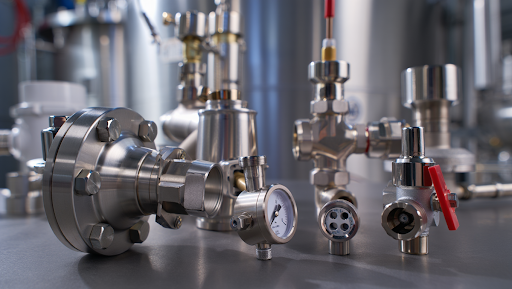
The transition toward a hydrogen-based economy is no longer a theoretical exercise; it is an industrial reality. However, this shift brings a formidable set of technical challenges. Hydrogen is the smallest molecule in the universe, characterized by its ability to permeate solid metals and cause what is known as hydrogen embrittlement. In high-pressure environments, typical of hydrogen storage and transport, the margin for error is zero.
Selecting the right hydrogen fittings is a critical decision that impacts the structural integrity of the entire infrastructure, the safety of the personnel, and the long-term viability of the plant.
At MEGA S.p.A., we understand that standard components often fail to meet the rigorous demands of the hydrogen sector. As a manufacturer specializing in high-performance fittings for the most demanding industries, we provide the engineering depth required to navigate the complexities of hydrogen infrastructure.
Ready to partner with a specialized manufacturer?
Contact the MEGA S.p.A. technical sales team today. We offer:
Table of contents:
- The hydrogen challenge: why standard fittings are not enough
- Technical specifications: materials and standards for hydrogen fittings
- Applications: where hydrogen fittings make the difference
- Manufacturing excellence: the MEGA S.p.A. advantage
- Integrating hydrogen into your infrastructure
The hydrogen challenge: why standard fittings are not enough
Hydrogen presents unique physical and chemical properties that differentiate it from traditional hydrocarbons like natural gas. To understand why specialized hydrogen fittings are mandatory, one must look at the atomic level.
Hydrogen embrittlement and material fatigue
Hydrogen molecules can dissociate into atoms on the surface of metals and diffuse into the crystal lattice. Once inside, they tend to migrate to areas of high stress, such as grain boundaries or the tips of microscopic cracks. This process reduces the ductility and fracture toughness of the metal, making it brittle and prone to sudden, catastrophic failure under pressure.
Standard carbon steels, which might perform perfectly in oil and gas applications, are often highly susceptible to this phenomenon. Therefore, the selection of hydrogen fittings must prioritize materials with specific chemical compositions, typically high nickel and chromium content, to inhibit this diffusion and maintain structural integrity over decades of service.
Leakage prevention in high-pressure systems
Because hydrogen is exceptionally light and small, it can escape through leak paths that would be airtight for other gases. In hydrogen refuelling stations or storage facilities, where pressures can reach up to 700 bar (or even 1000 bar in testing phases), the sealing surfaces of the fittings must be machined to exacting tolerances. Forged fittings, rather than those machined from bar stock, provide a superior grain flow that enhances the strength and leak-tightness of the component.
Technical specifications: materials and standards for hydrogen fittings
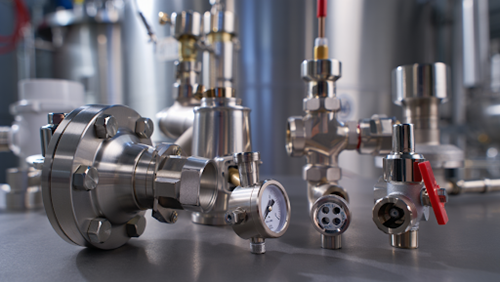
When specifying hydrogen fittings, the choice of material is the single most important factor. The industry relies heavily on high-quality stainless steels, but even within the 300-series, there are significant variations in performance.
Material selection
- Stainless Steel 316/316L: For hydrogen service, we ensure a minimum nickel content (often >12%) to stabilize the austenitic phase and maximize resistance to embrittlement.
- Inconel 718 and 625: Primarily used in extreme temperature environments or where hydrogen is combined with other corrosive elements (e.g., in chemical processing).
Dimensional and pressure ratings
Our hydrogen fittings are designed to meet and exceed international standards such as ASME B31.12 (Hydrogen Piping and Pipelines).
- Dimensions: Available in sizes ranging from 1/4" to 4" for high-pressure instrumentation and up to 24" or larger for transport pipelines.
- Wall Thickness: Heavy-wall designs are standard to accommodate the high stress-to-yield ratios required in hydrogen storage.
- End Connections: Options include butt-weld, socket-weld, and specialized hub connectors designed for rapid assembly and superior sealing in subsea or hazardous environments.
In hydrogen service, the surface finish of the internal bore is critical. Any micro-scratches or irregularities can act as initiation points for hydrogen-induced cracking. We utilize advanced polishing and finishing techniques to minimize these risks.
Applications: where hydrogen fittings make the difference
The hydrogen value chain is complex, encompassing production, storage, transport, and end-use. Each stage requires specific types of hydrogen fittings tailored to the operating conditions.
1. Green hydrogen production (electrolysis)
Electrolyzers operate in environments that combine high humidity with hydrogen gas. The fittings used here must resist both external atmospheric corrosion and internal hydrogen effects.
2. High-pressure storage and buffering
Hydrogen is typically stored in gaseous form at pressures between 350 and 700 bar. Storage facilities utilize a network of manifolds and piping that rely on forged fittings to handle the cyclic loading caused by frequent filling and emptying cycles.
3. Hydrogen refueling stations (HRS)
They require fittings that can handle rapid pressure changes and low temperatures (since hydrogen is often pre-cooled to -40°C before refueling to prevent overheating the vehicle's tank).
4. Industrial feedstock (chemical and steel plants)
Industries like steel manufacturing are switching from coking coal to hydrogen for ore reduction. These plants operate at high temperatures where the risk of High-Temperature Hydrogen Attack (HTHA) is prevalent.
Manufacturing excellence: the MEGA S.p.A. advantage
As a direct manufacturer, MEGA S.p.A. does not just sell components; we provide engineered solutions. Our facility is equipped to handle the entire production cycle, from forging to final testing.
Forging vs. machining
Why do we emphasize forged hydrogen fittings? Forging aligns the grain structure of the metal with the shape of the part, which significantly improves the mechanical properties and resistance to fatigue. In high-pressure hydrogen applications, a forged body offers a level of safety that machined components simply cannot match.
Testing and certification
Every fitting undergoes rigorous quality control. Our internal laboratories conduct:
- Positive Material Identification (PMI): To verify the exact chemical composition of the alloy.
- Ultrasonic and Radiographic Testing: To detect any internal flaws or inclusions.
- Dye Penetrant Inspection: To ensure the surface integrity of welds and machined faces.
- Hydrostatic and Gas Pressure Testing: Validating performance under actual operating conditions.
Integrating hydrogen into your infrastructure
For companies operating in the Oil & Gas or Nuclear sectors, the move to hydrogen often involves repurposing existing infrastructure or building new, adjacent facilities.
At MEGA, we are currently expanding our "Sectors" portfolio to include a dedicated Hydrogen division. We invite our clients and partners to share their specific application data. Whether you are dealing with cryogenic liquid hydrogen or high-pressure gaseous transport, our technical team is ready to consult on material selection and custom fitting geometry.
Choosing a partner for the long haul
The hydrogen economy is built on trust—trust in the technology, trust in the safety protocols, and trust in the components. By choosing a manufacturer like MEGA S.p.A., you are opting for decades of experience in high-risk, high-pressure environments.
Are you designing a new hydrogen project or upgrading existing facilities? Contact our engineering team today to discuss your technical specifications and request a quote for custom-forged hydrogen fittings.
Certifications
Standard
Object
Emitted by
Standard
UNI EN ISO 3834-2
Object
Design and production of welded forged fittings, self-reinforcing branch outlets (with and without flanges), forged pipes, special welded fittings in ferrous and non-ferrous material with overlay.
Emitted by
Bureau Veritas
Standard
API 5LD
Object
Cladding of pipes
Emitted by
API
Standard
Approval Certificate for Materials
Object
Products and forging
Emitted by
Bureau Veritas Marine
Standard
Lloyd's Register
Object
Products and forging
Emitted by
Lloyd's Register
Standard
NORSOK M-650
Object
ASTM A182 F44 ASTM A182 F51 ASTM A182 F53 ASTM A182 F55 ASTM B381 Gr.2
Emitted by
MRC Global
Standard
KTA 3201.1 Section 2.4
Object
Quality system, personnel, equipment
Emitted by
TUV
Standard
Pressure Equipment Directive 2014/68/EU (PED)
Object
Quality System
Emitted by
TUV
Products used
-
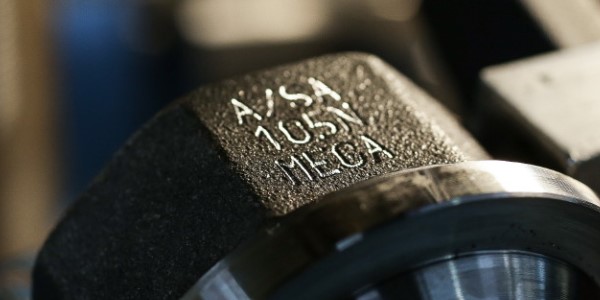
Standard steel pipe fittings
STANDARDS FITTING (ASME B16.11), UNIONS (MSS SP-83) and SWAGE NIPPLES (MSS SP-95)
Learn more
-
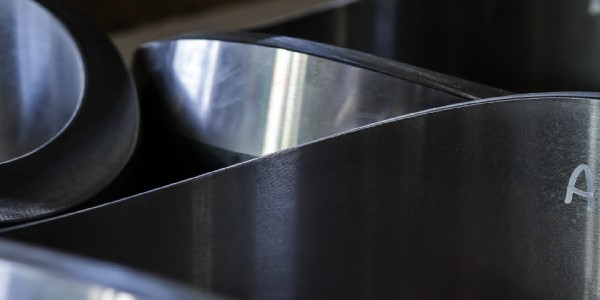
Branch outlet fittings
MEGALETS (BW, SW, NPT), LATROMEGALET, ELBOMEGALET, NIPOLET, FLANGED-MEGALET, INSERT-MEGALET (IM, IM-45°).
Learn more
-
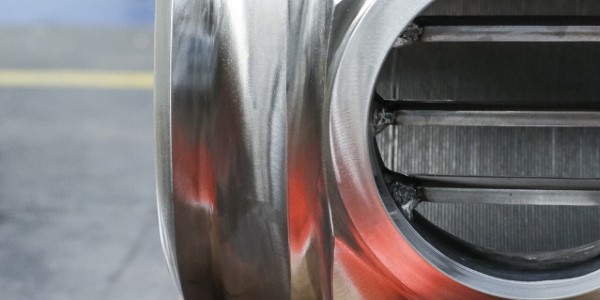
Special pipe fittings
M.E.G.A. has always stood out for its multi-technological capabilities and high-performance manufacturing, efficiently and flexibly carrying out the entire production cycle of each fitting, including special ones, starting from forging through to the final testing phase and any relevant certifications.
Learn more
-

Seamless pipes
SMLS, DSS AND SDSS PIPES
Learn more
-
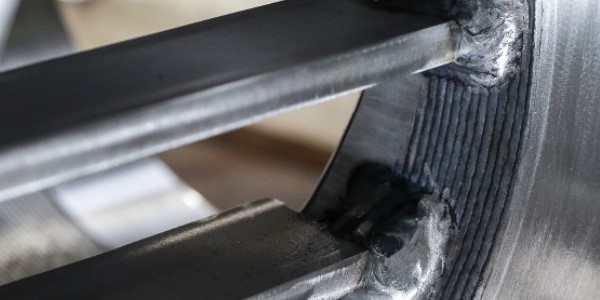
Welded items
SPOOLS, CLADDING
Learn more